


School improvement through Collaborative Complex Problem-Solving (CCPS)
An empirically proven methodology for school improvement.
Every school leader has faced it - that persistent challenge that resists every well-intentioned “fix”.
Using the Collaborative Complex Problem-Solving (CCPS) framework, we can help you to identify, analyse, and address the root causes of complex issues to achieve sustainable improvement
Overview
Collaborative complex problem solving (CCPS) is one of three capabilities required for excellence in leading improvement in teaching and learning. Capability in complex problem solving is key to leadership effectiveness, for leaders cannot achieve their improvement goals if they cannot solve the problems that stand in the way of success (Mumford et al., 2000; Patuawa et al., 2022).
The framework
CCPS rests on a rich, research-based, and flexible model of problem solving that supports leaders to collaboratively solve important problems using a five-stage approach. Illustrated in the diagram below, CCPS scaffolds leaders through a clear cycle that they lead with their staff — agree on the problem, inquire into causes, design solutions, implement and monitor, and evaluate impact that will lead to greater success in school improvement work.
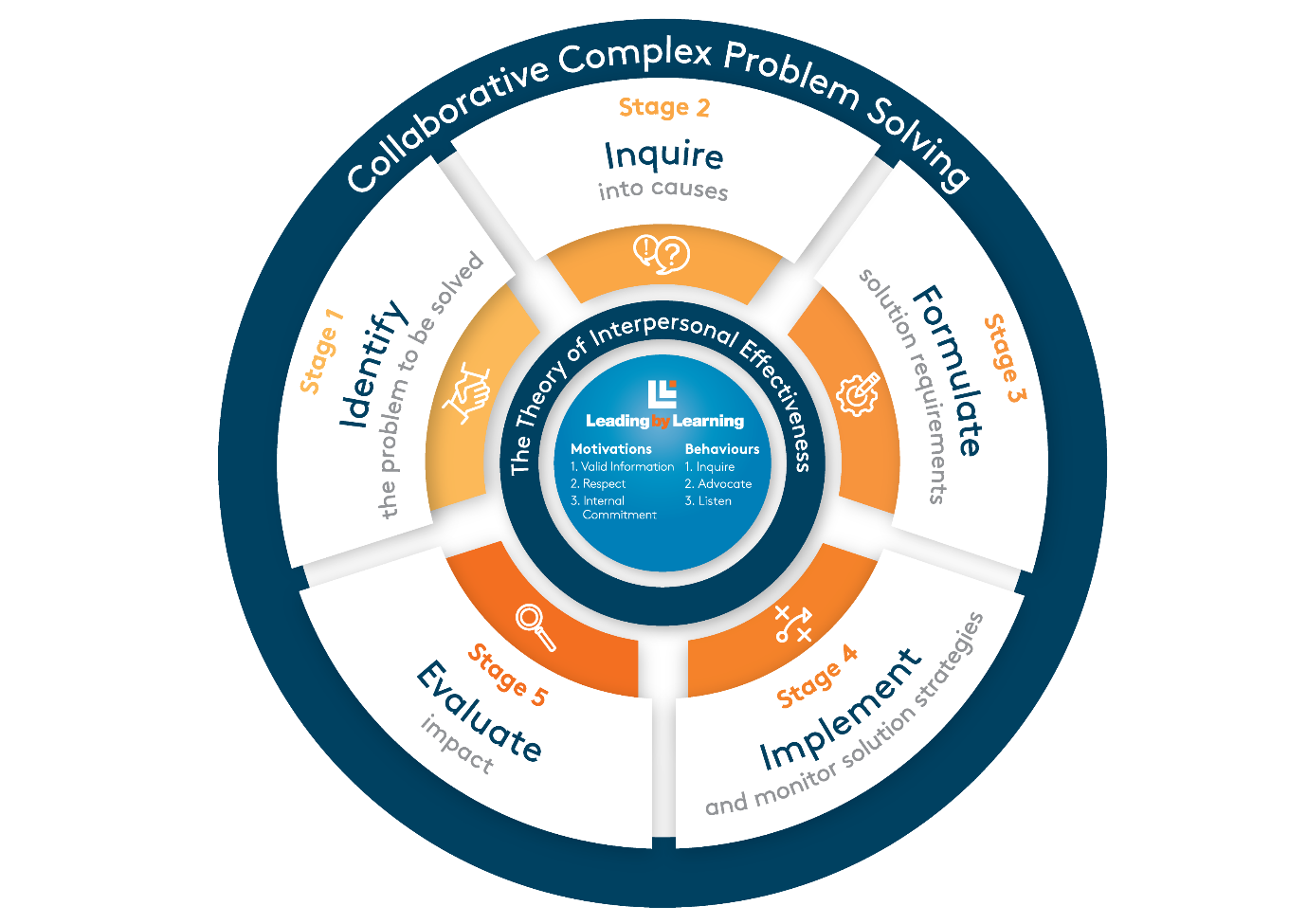
You will learn to apply the 5 stages of CCPS to an important improvement priority in your school, including
what makes a problem complex.
how complex problems can be solved through a systematic, iterative five stage process, and
how to collaborate with others in ways that progress the problem while building trust with those involved.
You will walk away with a draft plan that is for improving your priority improvement goal
Who is this for?
CCPS is applicable to any leader who is charged with solving an improvement problem. It could be a teacher leader wanting to improve the reading comprehension results of a small group of target children, a middle leader focusing on lifting results in an identified area of need, a school leader focused on an annual improvement goal, or a system leader supporting a network of schools pursuing a common achievement or wellbeing challenge.
Structure
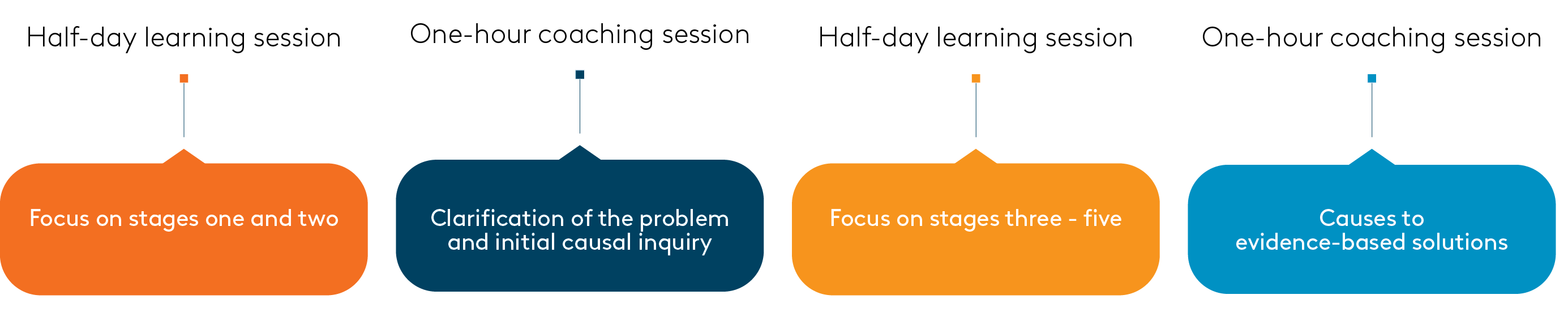
An example structure that works well is alternating half days of facilitated learning with coaching sessions in between.
Your investment
If your team would like to work on improvement together in your school or cluster, we can bring the workshops to you. Please contact us if you would like a proposal sent.
Insights from Distinguished Professor Emeritus Viviane Robinson
In this video, Professor Robinson explores the mindset and behaviours required for effective leadership. Her insights into courage, clarity, and collaborative inquiry form the foundation of the CCPS approach — guiding leaders to think systemically and act for long-term impact.
Go deeper
Articles:
Patuawa, J., Robinson, V., Sinnema, C., &u, T. (2021). Addressing inequity and underachievement: Middle leaders’ effectiveness in problem solving. Leading and Managing, 27(1), 51–78.
Addressing inequity and underachievement: Intervening to improve middle leaders’ problem-solving conversations. https://doi.org/10.1007/s10833-022-09449-3 or as a PDF here https://link.springer.com/content/pdf/10.1007/s10833-022-09449-3.pdf
Robinson, V. (2022). Virtuous educational leadership: Doing the right work the right way. Corwin.