


Secondary Learning Coherence Pathway
Three years. Whole-school change. Real-world readiness.
Supporting schools to prepare for a changing assessment landscape
Today’s Year 9 learners will be among the first students to experience a new assessment system as they move into Year 11 in 2028.
Schools should now be working to ensure their teaching, assessment, and reporting practices are aligned to support these learners, not just in theory, but in practice as the system continues to evolve.
A structured 3-year pathway to assessment coherence
Through the Secondary Learning Coherence Pathway, we work alongside secondary schools and kura, supporting them to strengthen coherence across Years 9–11 by:
aligning assessment and reporting expectations
improving clarity for students, staff, and community
building confidence in tracking and reporting progress
strengthening consistency across teaching, assessment, and learning.
We aim to support schools to build clear, connected systems that improve outcomes for learners over time.
What this looks like in practice
The Secondary Assessment Coherence Pathway is designed across three stages:
Year 1 – Establish and Prepare
Support your school to:
understand what is changing and when
evaluate how well current practice supports today’s Year 9 learners
define a clear direction for teaching, assessment, and reporting
identify strengths, gaps, and priorities using a structured alignment framework.
Year 2 – Implement and refine in real time
Support your school to:
implement coherent approaches as the first cohort enters the new qualification expectations
strengthen consistency across departments and teams
evaluate what is working well and what requires adjustment.
refine teaching, assessment, and reporting practices based on emerging evidence and student experience.
Year 3 – Consolidate and strengthen sustainability
Support your school to:
strengthen systems and practices based on real implementation experience
build sustainable leadership capability across your school
refine long-term approaches to teaching, assessment, and reporting
support continued coherence as the wider qualification landscape evolves.
Example pathway structure
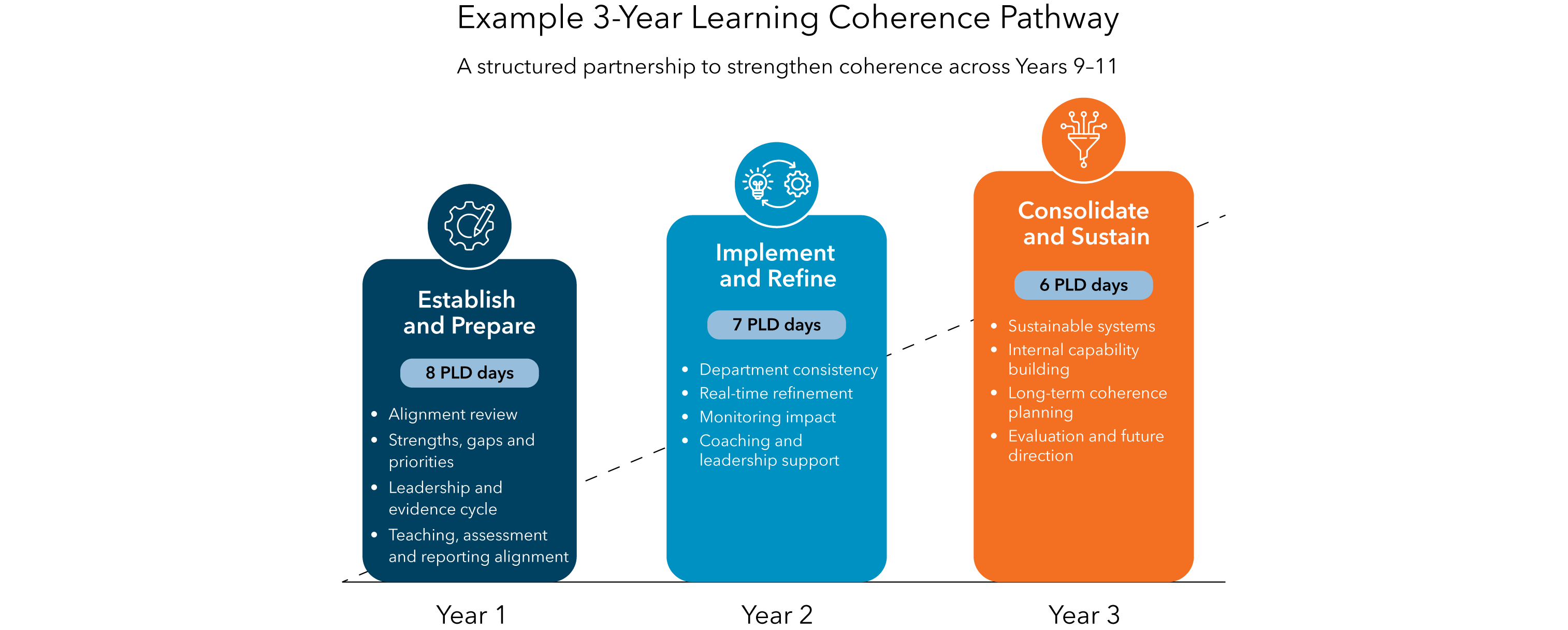
This visual illustrates an example of how a three-year Secondary Learning Coherence pathway may be structured, including weighted support across each year.
Support is intentionally stronger at the beginning of the pathway to help schools plan, prepare, and establish coherent systems with confidence. As capability, alignment, and systems strengthen over time, support gradually tapers to reflect growing internal ownership and sustainability.
Pathways are structured as annual partnerships, providing schools and boards with clarity around support, planning, and investment across each year.
Annual review points allow schools to reflect on progress, refine priorities, and adjust the pathway as needed over time.
Pathways are scaled to reflect the size and complexity of your school, ensuring depth of impact across leadership, departments, and systems.
Strengthening alignment across your system
A core part of the Secondary Learning Coherence Pathway is the use of a structured alignment framework designed specifically for secondary schools.
This supports schools to:
evaluate current assessment, teaching, and reporting practices
identify clear next steps for strengthening coherence
track progress over time across departments and teams
build shared understanding of what quality looks like in your context.
Working alongside your leadership team
Evaluation Associates works alongside your leadership team to ensure the pathway is practical, manageable, and responsive to your context.
We support you to:
plan with clarity through a co-designed roadmap
coordinate practices across departments and teams
strengthen leadership capability in assessment and reporting
build shared expectations of quality assessment practices
use a structured alignment framework to guide planning, progress and evaluation.
This ensures the changes you invest in lead to meaningful, lasting improvement.
What changes for your school
Through the pathway, schools can build:
greater consistency of teaching expectations across subjects and year levels
effective and sustainable assessment and reporting practices
align between teaching and assessment practices that support learning progress
shared understanding of policy and practice across leaders, teachers, students, and community
internal capability to sustain the work overtime.
Practical supports
Alignment with teacher-only days to reduce reliever costs
Hybrid delivery to minimise travel costs
Resources, strategies, and leadership support shared across your staff
A structured three-year partnership providing clarity and direction over time
Built in review points each year to reflect on progress and refine next steps
Flexibility to adapt the pathway as your context and priorities evolve
Schools retain flexibility to review and continue the pathway annually in line with their context and priorities
Who we work with
Secondary schools and kura seeking to strengthen consistency across teaching, assessment, and reporting in Years 9–11
Leadership teams (SLT, HODs, curriculum leaders) aligning expectations and practice across departments
Schools building coherent, sustainable systems for assessment and reporting
Ready to explore what this could look like for your school?
Get in touch to discuss how the Secondary Learning Coherence Pathway could be designed for your context.